
Kadelg's Export-Focused Two Piece Toilet Producer Role and the Trade-Offs of Format Choice in Overseas Sourcing
Sep 29, 2026
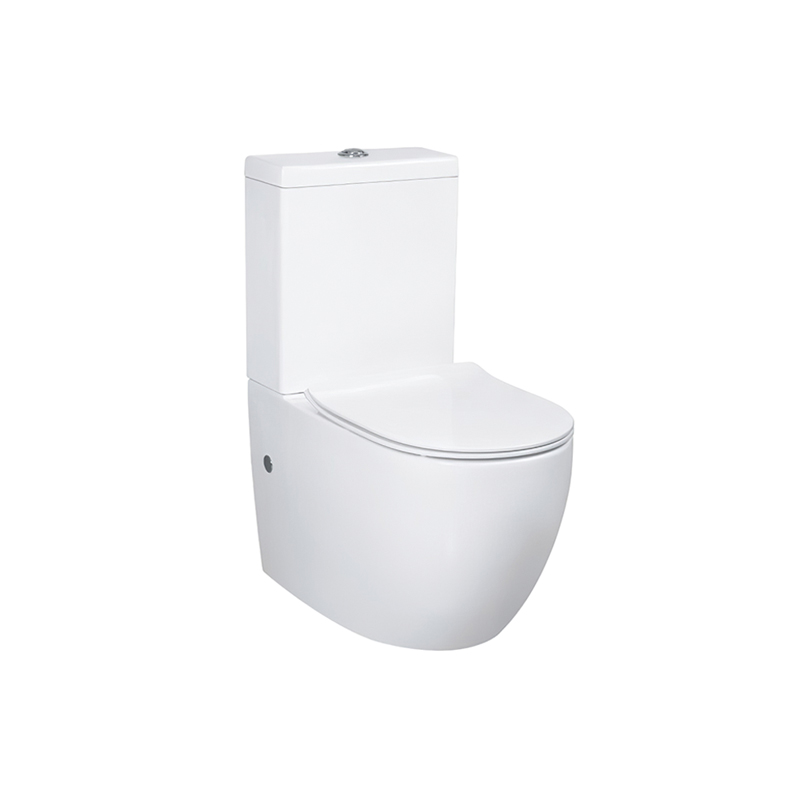
Chaozhou, Guangdong Sep 29, 2026 (Issuewire.com) - In international sanitaryware procurement, evaluating fixture formats requires balancing production costs, shipping density, and installer preferences. An export-focused two piece toilet producer manufactures fixtures with separate ceramic cisterns and bowls, joined during installation by mechanical fasteners and elastomeric gaskets. Understanding the operational trade-offs of this format helps distributors allocate purchasing budgets effectively across different market segments.
Overseas distributors evaluate two-piece fixtures by examining handling logistics, container packing efficiency, and wholesale turnover rates. Ceramic manufacturer Guangdong Zhongtao Technology Co., Ltd., founded in Chaozhou in 1998, produces high-grade vitreous china under its Kadelg brand. The factory uses continuous tunnel kilns to maintain dimensional consistency, flat mounting surfaces, and uniform glaze quality across high-volume export orders destined for international wholesale networks.
Physical Architecture and Carton Logistics
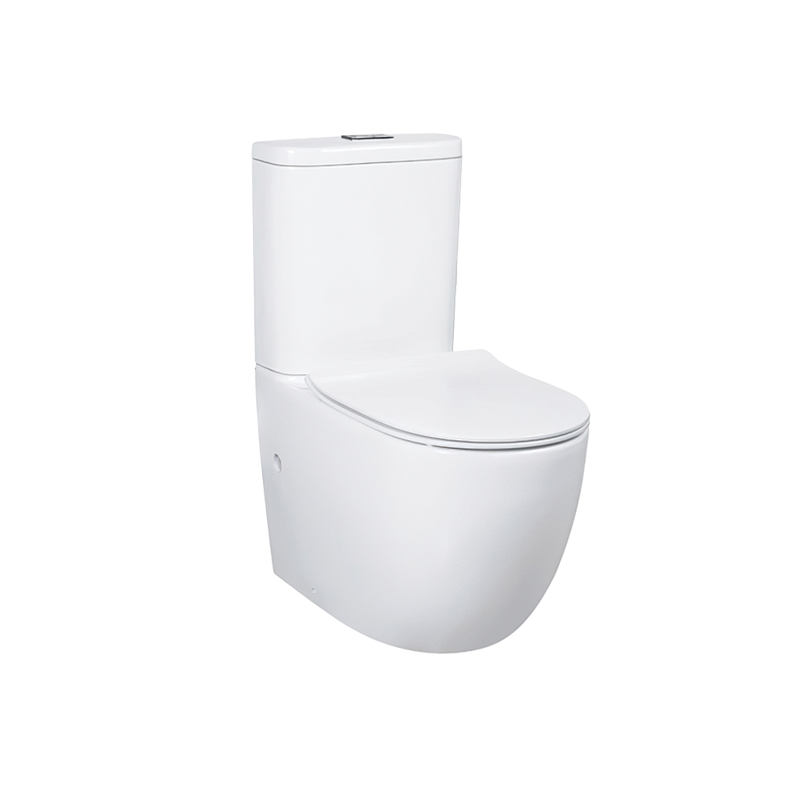
The primary structural feature of a two-piece toilet is the mechanical separation between the water cistern and the bowl. The cistern is cast and fired as an independent ceramic tank that bolts onto the rear deck of the bowl using corrosion-resistant brass or stainless steel hardware. A contoured sponge rubber or EDPM gasket seals the water transfer passage between the two ceramic components, preventing leaks during flush activation.
This modular architecture creates significant packaging advantages. Instead of packaging an awkward monolithic shape, factories pack the bowl and cistern in separate compact cartons, or nest them efficiently inside a combination carton. This packaging flexibility allows distributors to stack pallets higher in wholesale warehouses and optimize carton placement during intermodal container transfers, protecting ceramic rims from transit vibration.
Individual carton weights are significantly lower than one-piece equivalents. A two-piece bowl typically weighs between 22 and 30 kilograms, while the cistern weighs between 11 and 16 kilograms. These manageable carton weights reduce worker fatigue in distribution warehouses, simplify courier handling, and allow a single tradesperson to carry the fixture up stairs on residential jobsites without assistance, speeding up multi-unit installations.
Maximizing Ocean Container Cube Utilization
Freight efficiency is a primary driver in overseas sanitaryware sourcing. Because ocean shipping rates are calculated per container volume, packing density directly impacts the landed cost per unit. Two-piece toilet components pack more tightly into standard 40-foot high-cube containers than bulky one-piece units, providing substantial logistics savings across regular sea freight routes.
A 40-foot high-cube container typically holds between 650 and 850 two-piece sets, depending on whether the units are packed in separate boxes or single combination cartons. In contrast, one-piece toilets often limit container capacity to between 350 and 480 units due to carton bulk. This substantial difference in freight payload allows importers to reduce shipping costs per unit, supporting competitive wholesale pricing in price-sensitive trade channels.
Installation Dynamics and Jobsite Trade PracticesFloor Flange Alignment and Rough-In Variations
On the jobsite, installing a two-piece toilet follows a two-step sequence. The plumber first positions and secures the bowl onto the floor flange, ensuring a level base and a watertight wax or rubber seal. Once the bowl is anchored, the installer mounts the cistern onto the rear deck, tightens the tank bolts evenly to compress the coupling gasket, and connects the water supply line.
Coupling Gasket Compression and Bolt Sealing
This two-stage installation simplifies alignment in tight residential bathrooms. Working with lighter individual pieces allows the plumber to verify floor flange alignment and trapway seating without wrestling with the combined weight of a full water closet assembly. If the rough-in requires minor shimming to achieve level, adjusting the bowl alone is faster and safer than leveling an integrated one-piece fixture.
However, mechanical tank-to-bowl joints require careful bolt torque during assembly. Over-tightening steel bolts against ceramic lugs can crack the tank base, while under-tightening can cause slow water leaks. Factory quality control ensures that mounting decks are ground flat and bolt holes are cleanly formed, providing stable seating for tank gaskets and minimizing installation errors on site.
Commercial Roles in Wholesale and Trade Channels
In wholesale plumbing distribution, two-piece toilets serve as the primary volume driver for residential contractors, property management firms, and budget-conscious housing developers. The accessible price point and straightforward replacement compatibility make two-piece units the preferred choice for volume renovation and repair work across regional markets.
Carrying standard two-piece models allows plumbing merchants to supply four high-volume market segments:
- Residential subdivisions: cost-effective fixture supply minimizing initial build capital.
- Rental property maintenance: durable components with straightforward individual piece replacement.
- Plumbing trade contractors: modular boxes easily transported and installed by solo technicians.
- Volume retail merchants: accessible price points driving rapid inventory turnover.
From a facility management standpoint, two-piece fixtures also simplify replacement logistics. If a cistern suffers accidental impact damage during renovation, the property owner can replace the tank without removing the bowl or disturbing the floor seal. This interchangeability reduces repair costs for facility managers maintaining large commercial or rental properties, keeping overall maintenance budgets predictable.
Evaluating Flushing Performance and Mechanical Trim
Importers should recognize that two-piece construction does not compromise flushing performance. Modern two-piece toilets incorporate the same advanced hydraulics found in one-piece collections. Large 3-inch flush valves and fully glazed 2-inch trapways ensure rapid waste extraction while preventing internal residue accumulation.
Water conservation standards in major export markets require dual-flush performance of 4.5/3.0 liters or 6.0/4.0 liters per flush. Sourcing managers specify certified internal fill and flush valves that deliver rapid water release and quiet refill cycles. Combining efficient hydraulic bowl design with reliable flush valves ensures high bulk waste evacuation regardless of ceramic format, satisfying both residential and commercial building codes.
Balancing the Portfolio with Two-Piece and One-Piece ModelsCarton Logistics and Pallet Packing Efficiency
A well-structured sanitaryware catalog balances both two-piece and one-piece configurations to address different buyer segments. Two-piece models capture high-volume trade sales and project tenders where unit cost and installation simplicity take priority. Meanwhile, one-piece and wall-hung models cater to design-focused homeowners and upscale hospitality projects.
Wholesale Trade Demand and Replacement Market Alignment
By sourcing both formats from a dependable manufacturer like Kadelg, distributors achieve glaze consistency, unified design styling, and consolidated container shipments across their complete sanitaryware range, reducing inventory complexity and warehouse handling overhead.
Factory technical teams assist overseas buyers in selecting appropriate rough-in dimensions, trapway geometries, and packaging configurations tailored to destination market regulations and trade habits, ensuring smooth customs clearance and rapid wholesale distribution.
To examine technical drawings, compare container loading plans, and request production quotations for two-piece toilet ranges, visit https://www.kadelg.com/ to connect with the export sales department.
Source :Guangdong Zhongtao Technology Co., Ltd.
This article was originally published by IssueWire. Read the original article here.
/file/attachments/orphans/saravanan1_971938.png)
/file/attachments/orphans/asdadasdasdasdasd_285327.png)
/file/publisher-c1a3f893382d2b2f8a9aa22a654d9c97/2025/10/f543b3a4bbcdb253c83b86b48a4258c2.jpg)
/file/attachments/orphans/1_159874.png)
/file/attachments/886/4e4d24faf7a2cbd63a998687e1c5e648_619394.jpg)
/file/attachments/885/68c1c295bf743080e0859372597feeb0_974048.jpg)
/file/publisher-c1a3f893382d2b2f8a9aa22a654d9c97/2024/07/82185b3f0dfafa9e9bf44695166d6c21.jpg)
/file/publisher-c1a3f893382d2b2f8a9aa22a654d9c97/2023/10/744fe5a0ae69fdf1f4227ebecd537a23.jpg)
/file/attachments/orphans/image12_939236.jpeg)
/file/attachments/orphans/najib23121_480507.png)
/file/attachments/orphans/wak2_243202.jpeg)
/file/publisher-c1a3f893382d2b2f8a9aa22a654d9c97/2020/10/2bda679309c88e264ef963588bbe46d2.jpg)
/file/publisher-c1a3f893382d2b2f8a9aa22a654d9c97/2025/05/8a7be3d7b13cb33dbc82fe78a9b0875c.jpg)
/file/attachments/orphans/loke1_549913.png)
/file/attachments/orphans/test1_966370.png)
/file/publisher-c1a3f893382d2b2f8a9aa22a654d9c97/2021/09/0f259c6be74885196574ef58d49e8b4a.jpg)
/file/attachments/orphans/anwardrm_825801.png)
/file/attachments/orphans/AnnessaTan1_502210.jpg)
YOURSAY | Loke bites the bullet as leader of DAP
Sep 29, 2026
/file/attachments/orphans/AzmiKamaruzaman1_401079.png)
/file/publisher-c1a3f893382d2b2f8a9aa22a654d9c97/2026/08/b1474f024fb67114022904f03b1f7cff.jpg)
/file/attachments/orphans/IsraelHoughton1_454506.png)
/file/attachments/orphans/am12_535472.png)
YOUR NEWS, OUR NETWORK.
Do you have Great News you want to tell the world?
Be it updates about your business or your community, you can make sure that it’s heard by submitting your story to our network reaching hundreds of news sites across 6 verticals.